



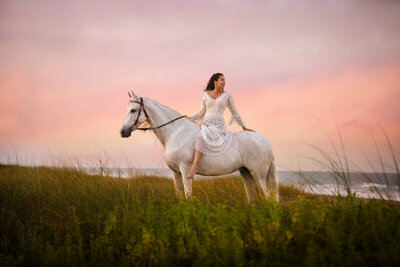


Every horse I photograph out here deals with the same two things: New Mexico wind and New Mexico sand. Neither one cares about your session date. What actually determines how your photos turn out isn’t luck on the day. It’s what you and your horse do in the two weeks before I show up with a camera. Most of it is simple. None of it is complicated. But it’s the difference between scrubbing dried mud off his legs all morning and actually enjoying your session. I’ve put together the exact prep list I give my Las Cruces clients. It runs from the first bath to the last band in his mane. Here’s how to get your horse ready.

Bathe Him a Few Days Before, Not the Morning Of
A full bath right before your session strips the natural oils out of the coat. Those oils are what give a horse that deep, healthy shine in photos. Wash him three to four days out instead. That gives his coat time to reabsorb those oils and settle back down. By session day he’s clean and shiny instead of clean and flat. It also means you’re not fighting water spots, a still-damp coat, or a dust-caked tail right before your session. A same-day bath looks great for about twenty minutes. Then it works against you.

Groom Him Like He’s Headed Into the Show Ring, the Day Of
Session morning is show morning. Curry him out and brush until the dust stops coming up. Work through every tangle in the mane and tail, then pick his hooves. Wipe down his face, ears, and whiskers with a damp rag until he’s got that finished look. I know it’s a lot for a photo session and not a class. But the difference shows up on camera. Treat the morning of your session the same way you’d treat the morning of a big class. He’ll look the part in every frame.

Save the Hoof Oil for Black Background Sessions Only
Hoof oil gives a beautiful glossy finish. It’s a great move for a black background session. He’ll be standing on a clean surface with no ground dust involved. If your session is outdoors, though, skip it. Las Cruces is desert. Every step he takes kicks up sand and dust that sticks right to an oiled hoof. A few minutes into the session, that polish is gone. Now it’s just dirt caked onto his feet instead of shine. Match the hoof prep to your session location, not the other way around.
Polish Your Tack the Week Of
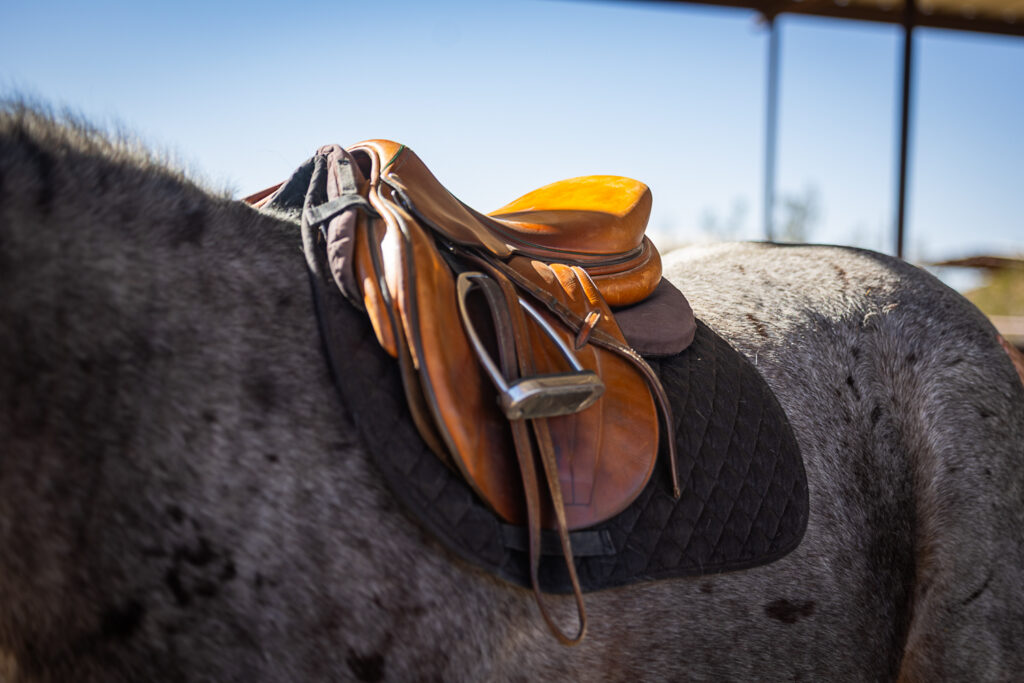
Tack often ends up in frame, whether that’s a horse and rider session or a western banding look. Give yourself the week before to get it ready. Clean and condition the leather, then polish any silver. While you’re at it, check your buckles and stitching for anything that needs fixing. Don’t leave the polishing for the night before. Tack that’s had a few days to dry and set looks better than tack rushed through the night before. And you’ll have one less thing to scramble over on session morning.
Feed Him on His Normal Schedule
If your session falls anywhere near his usual mealtime, feed him like you would any other day. A horse who’s hungry or thrown off his routine gets antsy. And antsy doesn’t photograph well. A food-motivated horse spends the whole session thinking about his next meal, not standing where you need him. Keeping his schedule normal keeps his head in a normal place too. That makes everything from standing still to loading up that much easier.
Clean Eyes, Nose, and Mouth Beforehand, and Keep a Rag on Hand
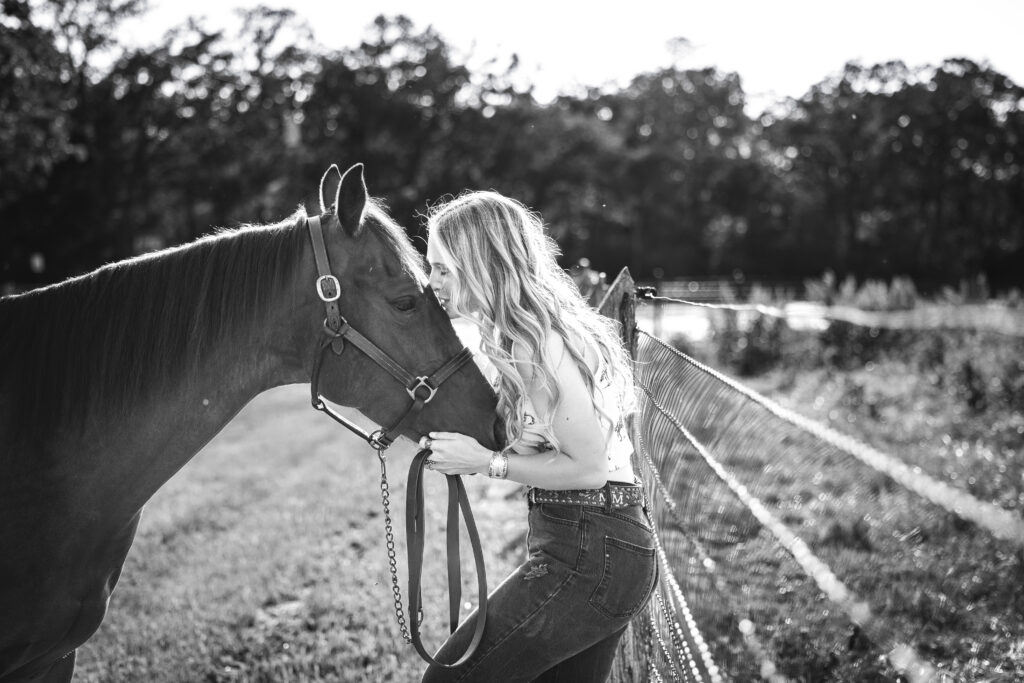
Wipe down any eye gunk and clear his nose before I start shooting. Check his mouth and lips for stray bits of hay too. Then keep a clean rag or towel within reach for the whole session. Horses make new messes constantly. He’ll rub his eye, drool on himself, or find something new to get on his nose. It happens two minutes after you just cleaned him up. Having that rag on hand means I can do a quick touch-up between shots. That beats working around it or editing it out later.

Practice Exactly What You Want Photographed
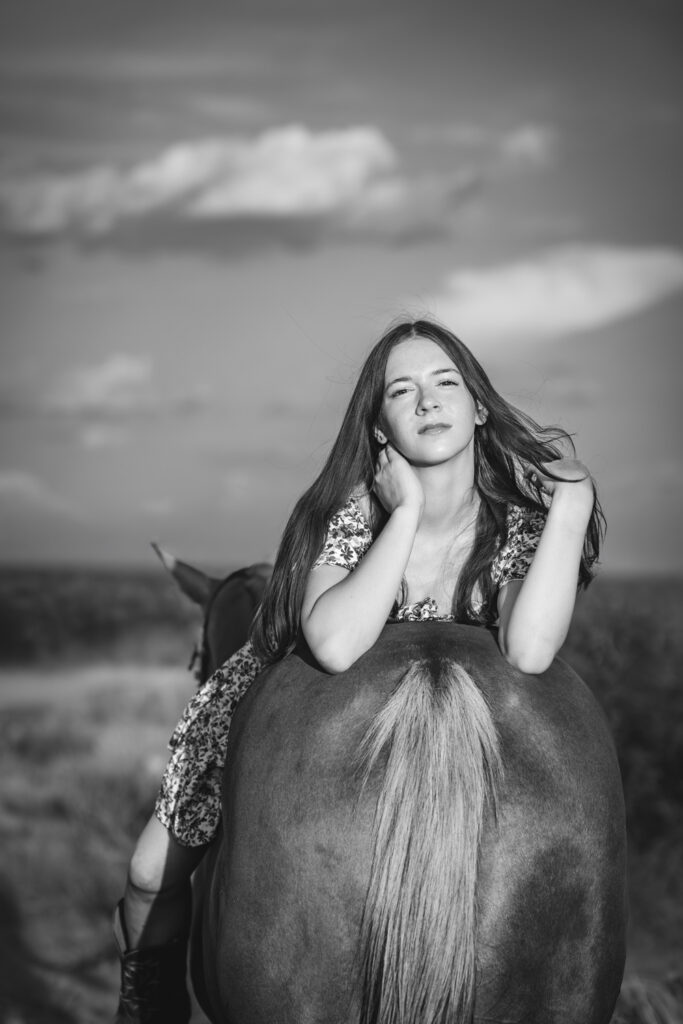
Whatever you want in the final photos, rehearse it first. Want him standing still without fidgeting? Work on that in your own arena. Want him grazing-free in a grass field, head up instead of down? Practice standing in grass and asking him to hold that position. Riding bareback is part of the plan, so get on bareback before session day. That way it’s not new to either of you. A billowing dress or veil in the shot? Grab a sheet or a flag and let him see and feel fabric moving around him ahead of time. That way the first time he feels it, you’re not already wearing it. Whatever you’re picturing for the final images, that’s exactly what needs rehearsal beforehand.
Refresh His Groundwork
Spend some time in the weeks before your session brushing up on leading, standing square, backing, and yielding his hindquarters. Work on anything else you’ll be asking of him during the shoot too. It’s also worth getting him comfortable around a camera bag, a tripod, or anything else he might see me carrying. A horse who’s a little rusty on groundwork is going to be a little rusty on session day too. I’d rather you spend that time now than lose it mid-session trying to get him to stand where you need him.
Run a Full Trial Session Before the Real One
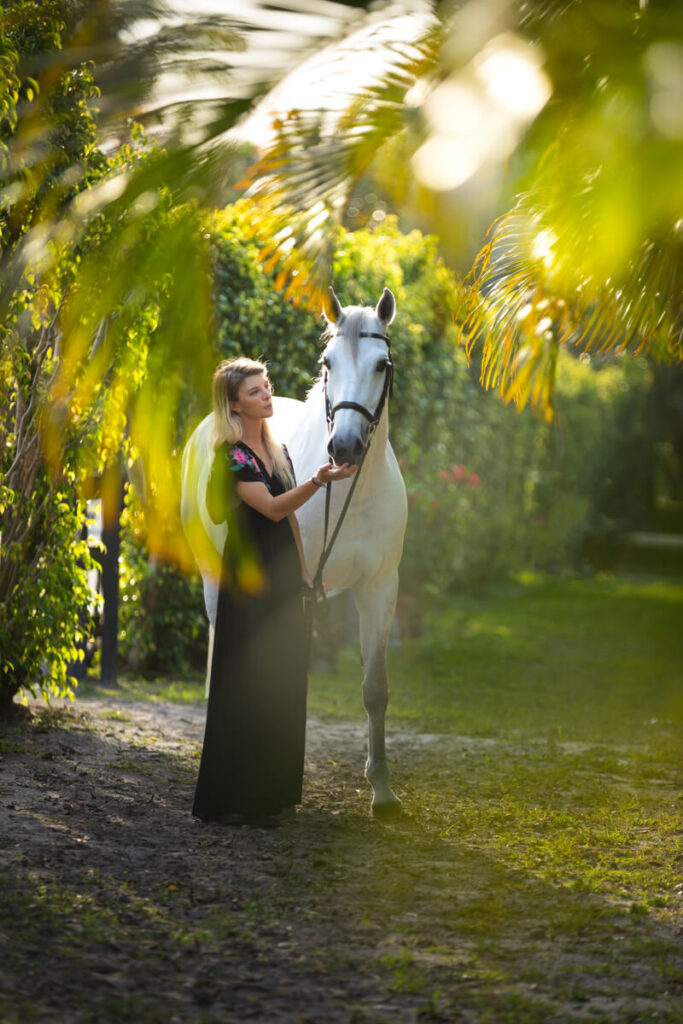
This is the step people skip, and the one I’d tell you not to. Put on the actual outfit. Get on bareback if that’s the plan. Flutter the dress around him. Walk him through water if water’s part of your vision. The point of a trial run is simple: nothing about session day should be new to your horse. Not the outfit, not the movement, not the water under his feet. Whatever surprised him in the trial run won’t surprise him again when it actually counts. You’ll walk into your real session already knowing what works.

Band (or Braid) His Mane to Match Your Tack
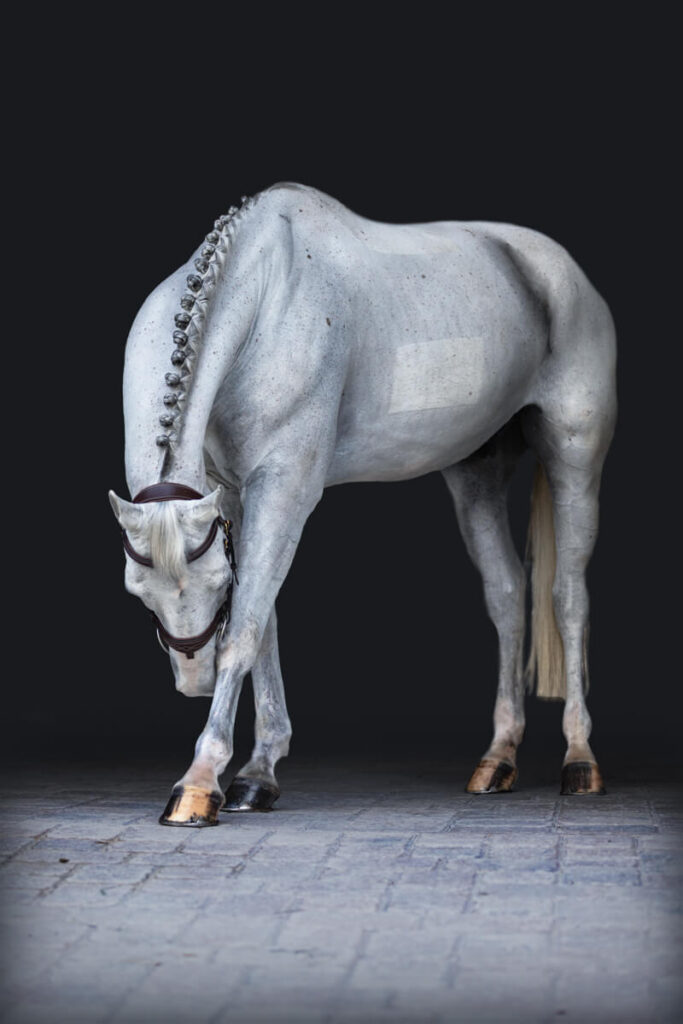
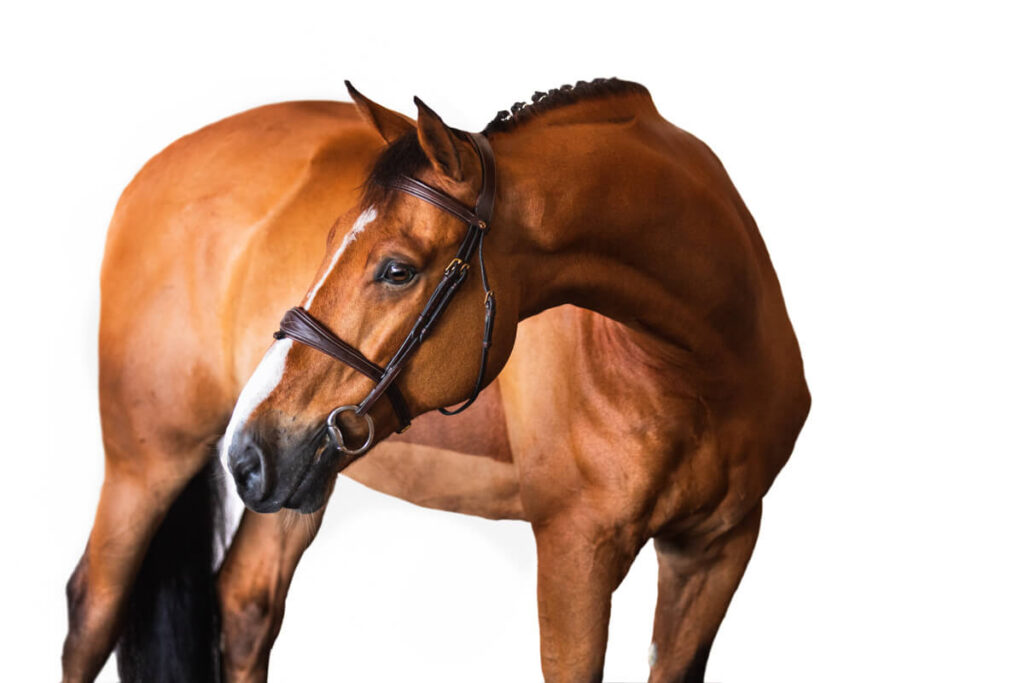
Banding gives a horse that finished, show-ready look, and it’s especially worth it if you’ve booked a black background session where every detail is going to show. Banding is a skill of its own, so if you’re not confident in your own work, ask a friend who is or hire someone. It’s worth it. What matters just as much as the banding itself is matching your band style to your tack. If you’re doing western banding, bring western tack into the shots to keep the whole look cohesive. If you’re doing dressage braids, bring dressage tack. And if you’d rather skip the structured look altogether, a natural mane left loose, or braided just enough to leave a wave, is a classic look that never goes out of style.
Pro tip: once he’s banded, throw a slinky on him overnight so nothing shifts before morning. Check your work before your session anyway. My own horse finds a way to break a band or two every single time, so don’t be surprised if you need to make a touch-up or two before your session gets going.
He’s Ready. Now Let’s Talk About You.
Once you’ve worked through all of this, your horse is ready for his session. That’s true whether it’s a horse and rider session, a black background session, or an at liberty session. There are a few things I always suggest keeping within reach for the day itself. A soft brush, a bottle of Show Sheen, a mane and tail comb, and fly spray. Those four cover almost every touch-up that comes up while I’m shooting. From a windblown mane to a fly that won’t quit landing on his shoulder mid-pose.
Putting the time in ahead of your session is what lets your images actually pop. It’s also what lets you relax on session day instead of spending the morning scrubbing mud off your horse’s legs.
Get Help on the Big Day, Too
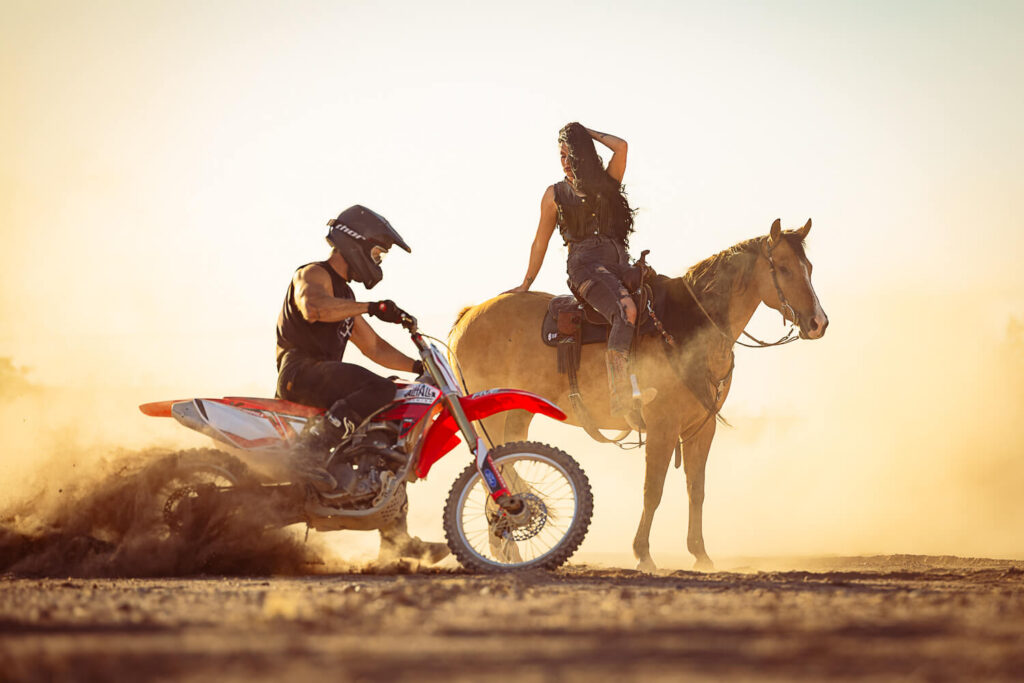
Getting everything ready for an equestrian portrait session takes real time. It can get stressful fast, especially if you’re doing all of it yourself. I always recommend having your hair and makeup done professionally the morning of. That one step alone saves you a surprising amount of time and stress. It also means you’re not stuck in front of a mirror instead of with your horse. It’s also worth asking a friend to come along and help. Holding treats, handing you a bottle of water, or just being another set of hands when you need one. That frees you up to actually enjoy the process instead of running the whole morning solo. It usually means better photos too, since you’re relaxed instead of rushed.
I can’t wait to photograph you and your horse! Shoot me a message when you’re ready to get your Las Cruces session on the calendar.

